
Q and A: my writing process
- John Keeman

- Aug 31, 2020
- 4 min read
Updated: Sep 1, 2020
What are your earliest memories of writing?
They go way back to my school days over sixty years ago. English and French were the only subjects I was any good at or interested in. Later, in my early forties, I wrote quite a lot of poetry for my own interest. I studied law, which required a great deal of reading and writing, but it was during my job as a researcher with the BBC that I considered writing a novel. In my job I read and wrote about a variety of subjects selected by others so I decided I would like to write something of my own choosing. I wrote a sequel to one of my favourite novels, John Wyndham’s ‘The Midwich Cuckoos,’ set about fifty years after the original. That was my first full length novel so I had established I had the discipline to write a lengthy piece.
Which authors inspire you most?
I generally read more factual books than fiction, although since retirement I’m probably catching up with fiction. I cannot say I’m a great fan of authors, apart from Raymond Chandler. I’m more drawn to their work. On the fiction side, I like everything written by Raymond Chandler, and selections from Alistair MacLean, John Le Carre, Frederick Forsyth, John Buchan, John Steinbeck, Robert Harris, George Orwell, Robert Lewis Stevenson, John Wyndham and a host of others. The first book I ever read was ‘Black Beauty’ by Anna Sewell, so I suppose I should include her as well.
What books would you compare In the Shadow of the Crane to?
As it’s the story of one person’s life and therefore unique, I think it is difficult to compare it to other writings. I suppose any other book written about growing up in Glasgow in the 1940s/50s will tell a similar story. It’s not a ‘No Mean City,’ genre.
What were the best and worst parts of writing In the Shadow of the Crane?
I honestly do not think there was anything I particularly liked about writing this. When you dig deep into your own past there are many things that depress you rather than having loads of happy memories. I would have said that the worst part was writing about the death of my son James, but that is with me every day of my life and although I cried a lot during writing that part of the book, I managed to get it done.
How much research did In the Shadow of the Crane require and what was that process like?
Most of my research came from inside my head. Looking over seventy years is quite a task, but as I rarely threw anything out I had access to a lot of materials: old photos, letters, diaries, and so on. The process was much like writing anything else but I confess I asked myself the question 'Why am I doing this?' many times more than with any other writings.
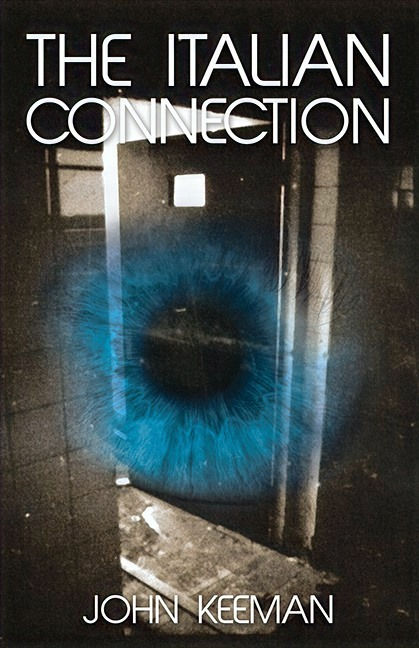
Your first book, The Italian Connection, was a novel. How does the experience of writing a memoir differ from that of writing a novel?
A novel, unless based on real experiences, comes straight from the imagination and as Ringwood Author Alex Gordon says, you can write absolutely anything you like. Characters can be as outrageous as you desire as can everything else. Memoirs however, ought to stick as close to the truth as possible in my view. It is pointless trying to make yourself more intelligent than you are, more caring than you are, tougher than you are, or more in control of your life than you ever were. You cannot turn your own life into a work of fiction. An autobiography is one thing but when you get to the stage of writing multiple autobiographies, like some people do, I think you’ve lost it.
Your work tells the story of Glasgow and the West of Scotland in transition. What are your favourite books set in this area?
I don’t think I have read any particular books dealing with this. Much of what I have read is peoples’ memories on the likes of Youtube. I did a video where I walked around Anderston comparing present day scenes to what they looked like many years ago. (To get a sense of the changing face of Anderston, watch John's video here here)
When and how do you write? In the morning, afternoon or evening? In long sessions or short bursts?
I prefer late evenings. As a general rule I aim for between 1.000 and 1,500 in a session of writing. But as they say rules are made to be broken. However I do not want to be a writer who works on the same novel for ten years.
How did your reading and writing change over lockdown?
I can’t say it did much. There was still plenty of access to materials online and there was plenty of time to read and write as long as you could be motivated, surrounded by nothing but bad news and even worse- Pandemic Poetry. Or pathetic poetry if you prefer.
What other Ringwood titles are you excited to read?
I like the work of Brian McHugh, Alex Gordon, Frank Woods, Charles Grey, et al.
To pre-order a copy of In the Shadow of the Crane, click here.
To buy a copy of The Italian Connection, click here.

Comments